Leading a homepage with trust, not just traffic.
Everyday Health — Brand & Homepage Redesign
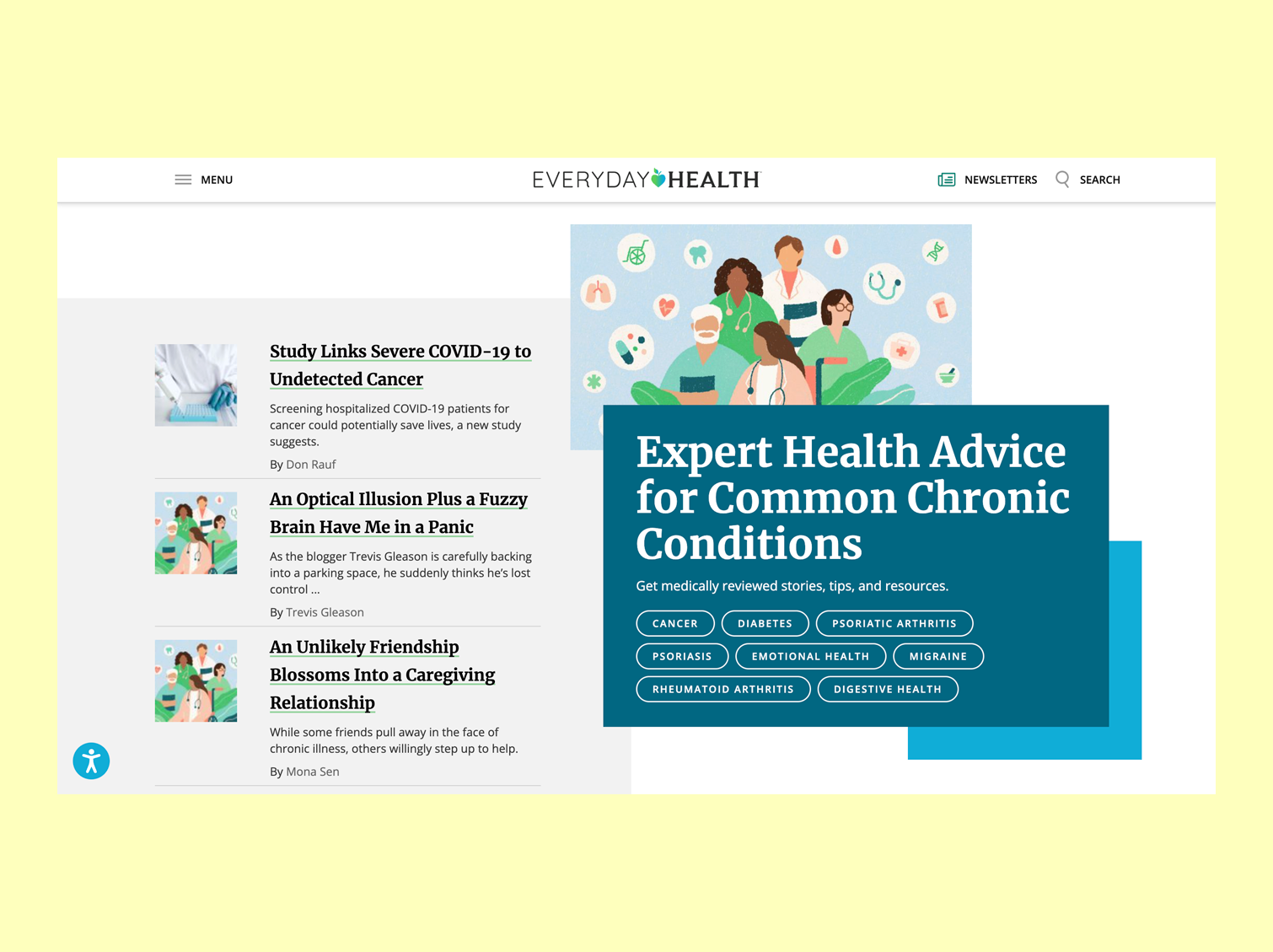
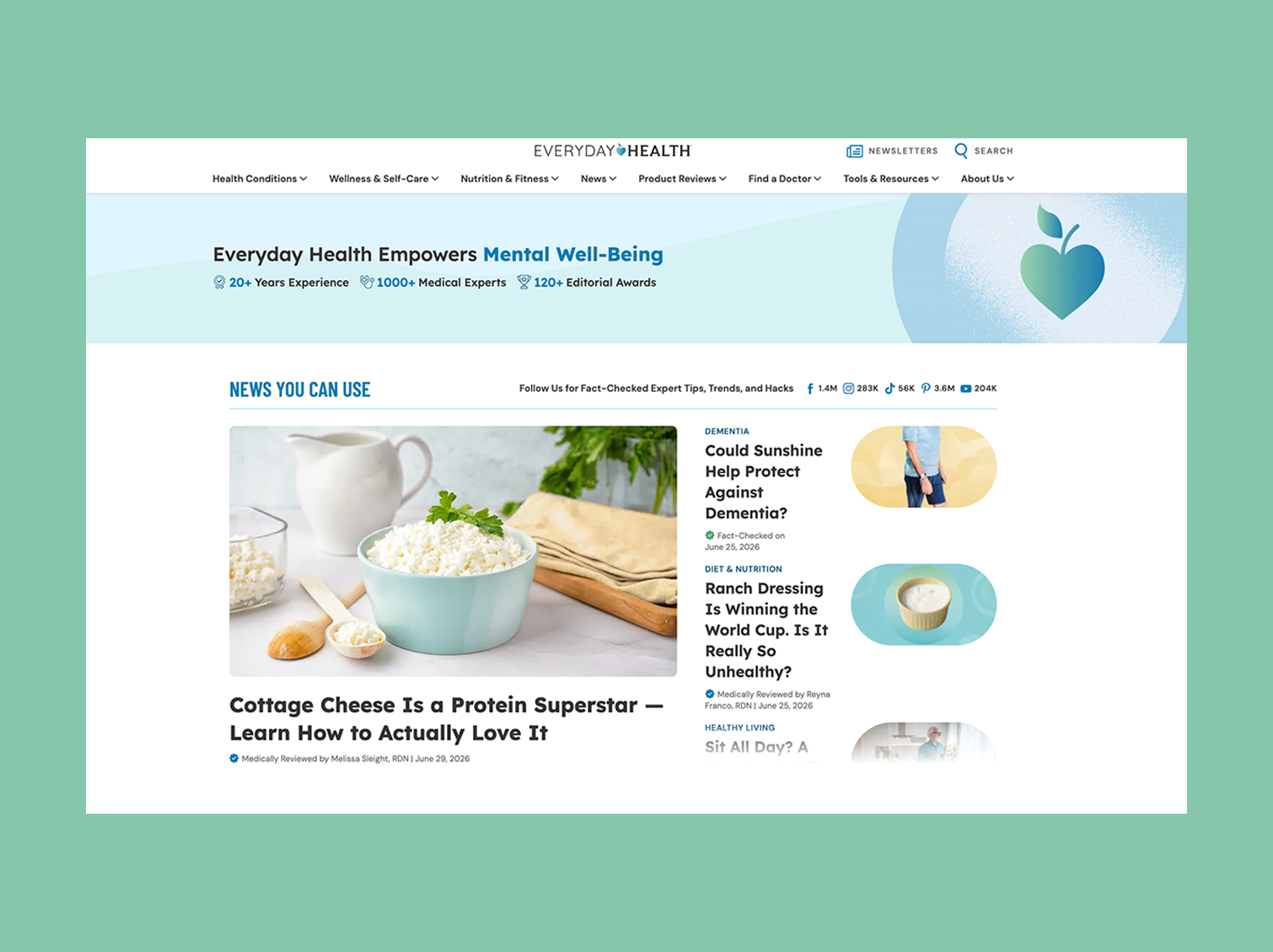
I had the pleasure in leading the design direction for the Everyday Health rebrand and website refresh as the Director of Product Design. Below is a comparison of the current homepage against the old website, built to show how the site moved from a dense, link-heavy content feed to a homepage that leads with medical credibility and human relevance.
Then & Now
The first five seconds changed completely.
The old homepage dropped visitors straight into a content feed with no introduction to who Everyday Health is or why its information can be trusted. The current homepage opens with a dedicated trust banner: years of experience, the size of the medical review network, and editorial awards, stated plainly before a single article headline appears.
The Problem
A health site that didn't look like it could be trusted with health decisions.
For a publisher whose entire value proposition is medically accurate information, the old homepage gave very few visual cues that the content was reviewed by anyone. Stock-feeling illustration, dated typography, and competing modules made the page feel like a generic content farm rather than a medical publisher.
No visible editorial trust signals
No "medically reviewed by," no fact-check dates, no credentials in sight on the homepage — the most important differentiator for a health publisher was invisible.
Repetitive, generic imagery
The same illustrated group of healthcare workers appeared as the thumbnail for six or more unrelated stories in a single scroll, flattening every topic into the same visual.
Competing, duplicated modules
"Today's Top Stories" and "Stay In the Know With News You Can Use" surfaced overlapping headlines in two different formats on the same page.
Dated visual language
Serif headlines, underlined links, and a dense single-column list pattern read more like a blog template than a modern health authority.
The Approach
Make every credibility signal visible, not buried in a footer link.
Reviewer credentials, update and fact-check dates, sourcing standards, and medical review badges were integrated directly into the article experience rather than hidden on a separate About page. The redesign also added a dedicated “Meet Our Experts” section, giving readers clear visibility into the qualifications and expertise of the medical reviewers and contributors behind the content.

New Tools and Features
Bringing Experts, Tools, and Real Experiences Forward.
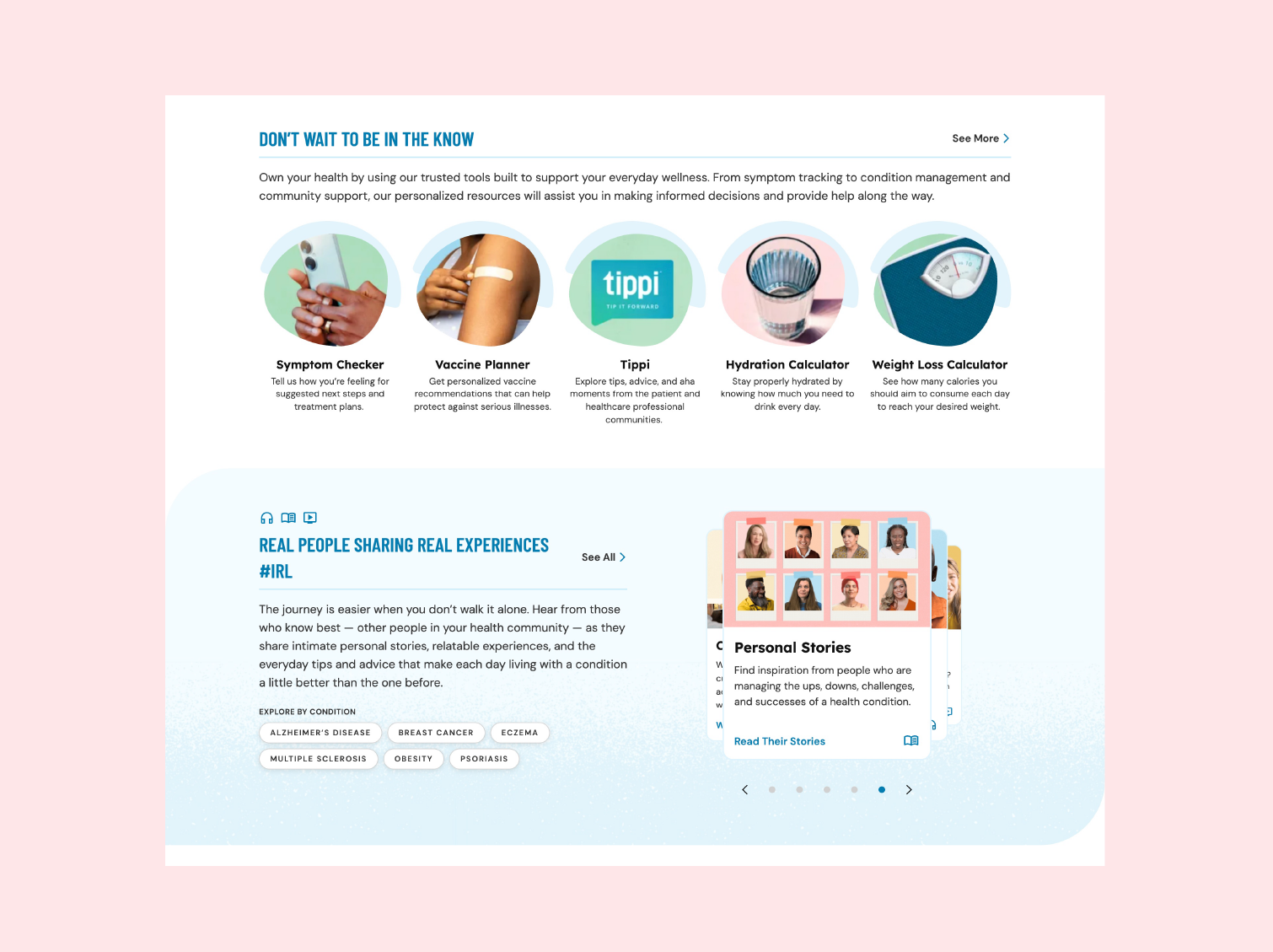
The redesign brought two of the site’s most distinctive assets, interactive health tools and first-person condition stories, much higher into the experience which unifies them into a recognizable family of features. At the same time, new trust-focused modules highlighted real experts, contributors, and patient perspectives more prominently throughout the site, making the content feel more transparent, credible, and human.
What Changed
An overview of the rebrand.
Brand Continuity
Not everything changed — and that was deliberate.
The footer tagline, "Wellness inspired. Wellness enabled." survived the redesign untouched. Keeping that one piece of copy constant while modernizing the color, type, and structure around it signals evolution rather than a full identity replacement — useful for a 20+ year old brand that didn't want to lose what people already recognized.
The Takeaway
Redesigning for trust, not just for traffic.
Every change ladders up to one question: does this make a visitor more confident in the information?
From the hero's credibility badges to the in-line reviewer credentials to the medically reviewed badge sitting next to a headline, the through-line of this redesign is making editorial trust visible at every scroll depth and not just stated once on an About page. That's the kind of structural shift that matters most for a publisher, where credibility is the product.